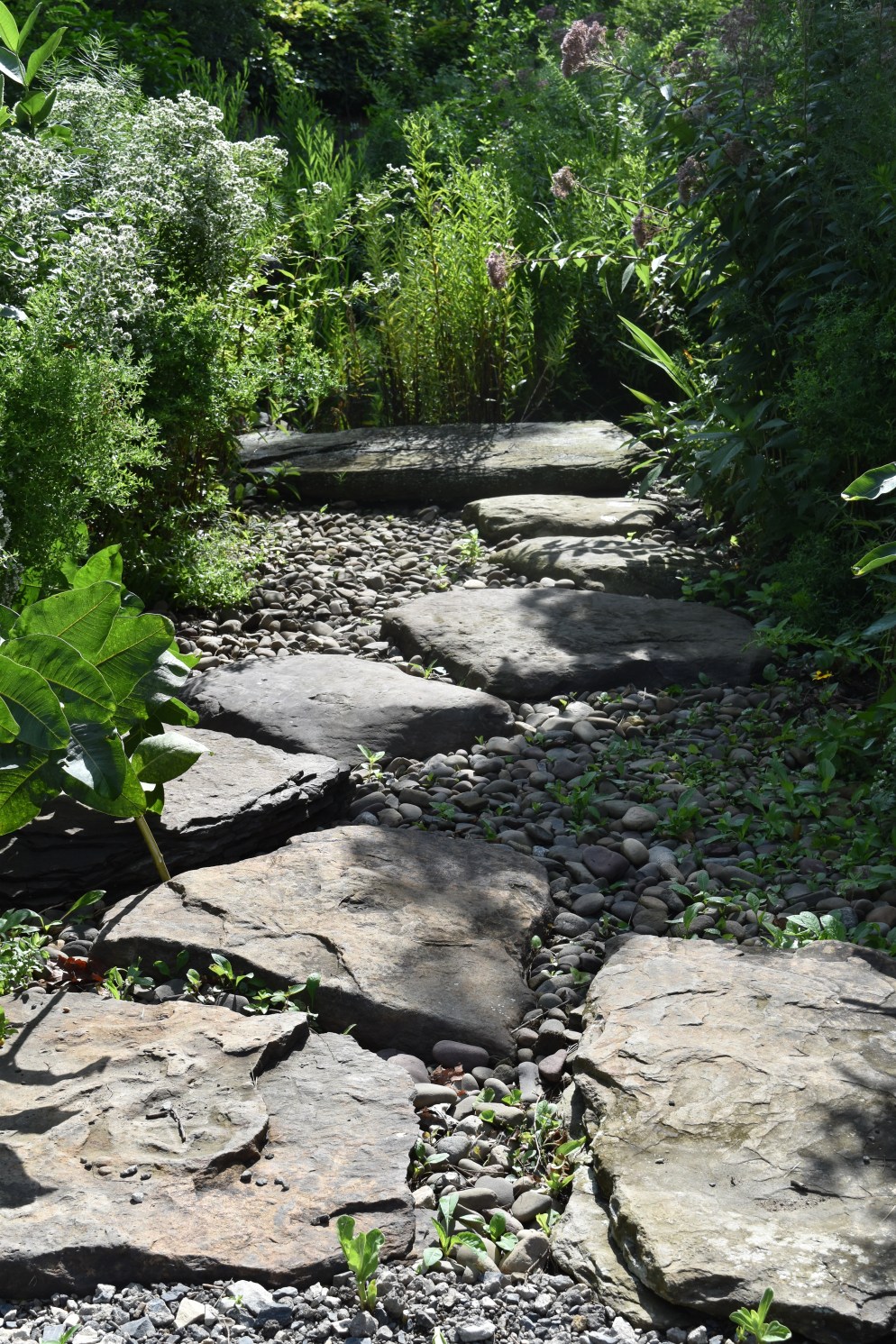
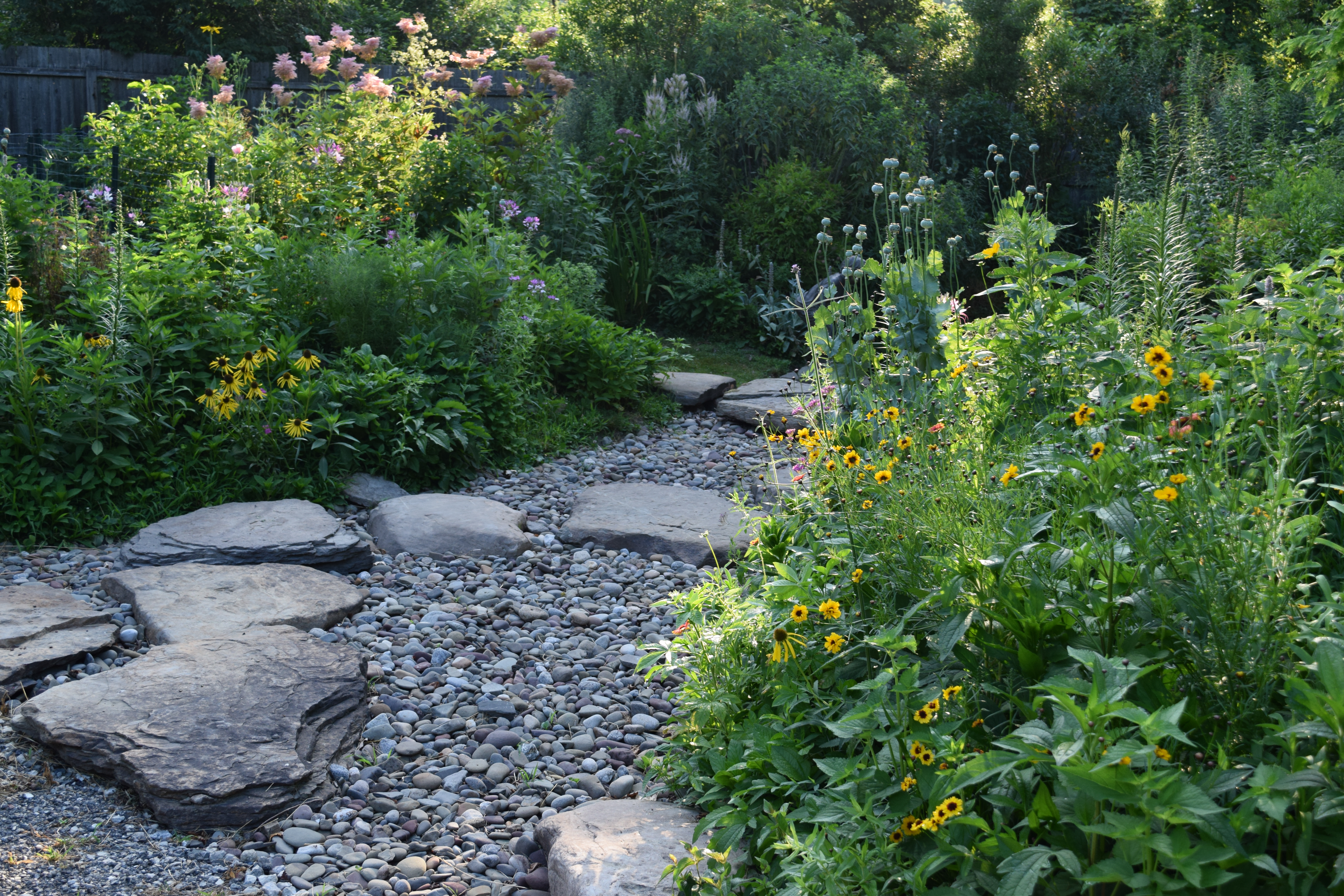
You may think that adding a rain garden to your own garden is not for you, but I am going to suggest that even a small one might be a good thing for you, your neighbors, and to encourage wildlife including pollinators.
What is a Rain Garden?
First of all – what is a rain garden? The simplest definition is that it is a low-lying area of your yard that collects water after rain and lets it sink into the soil. Why is that important to us? As we continue to build and pave areas of land there are fewer places left for water to sink back into the soil. There is increased runoff into drains and flooding and erosion downstream.
Why I Built My Rain Garden
My rain garden began because one of my neighbors had flooding in her back yard after big rainstorms. I thought, ‘I can help reduce that’. It was November and I had nothing else better to do. I considered where I could put a rain garden to hold large rainfalls on my property, so that my neighbor’s back garden did not flood as much.
How I Built My Rain Garden
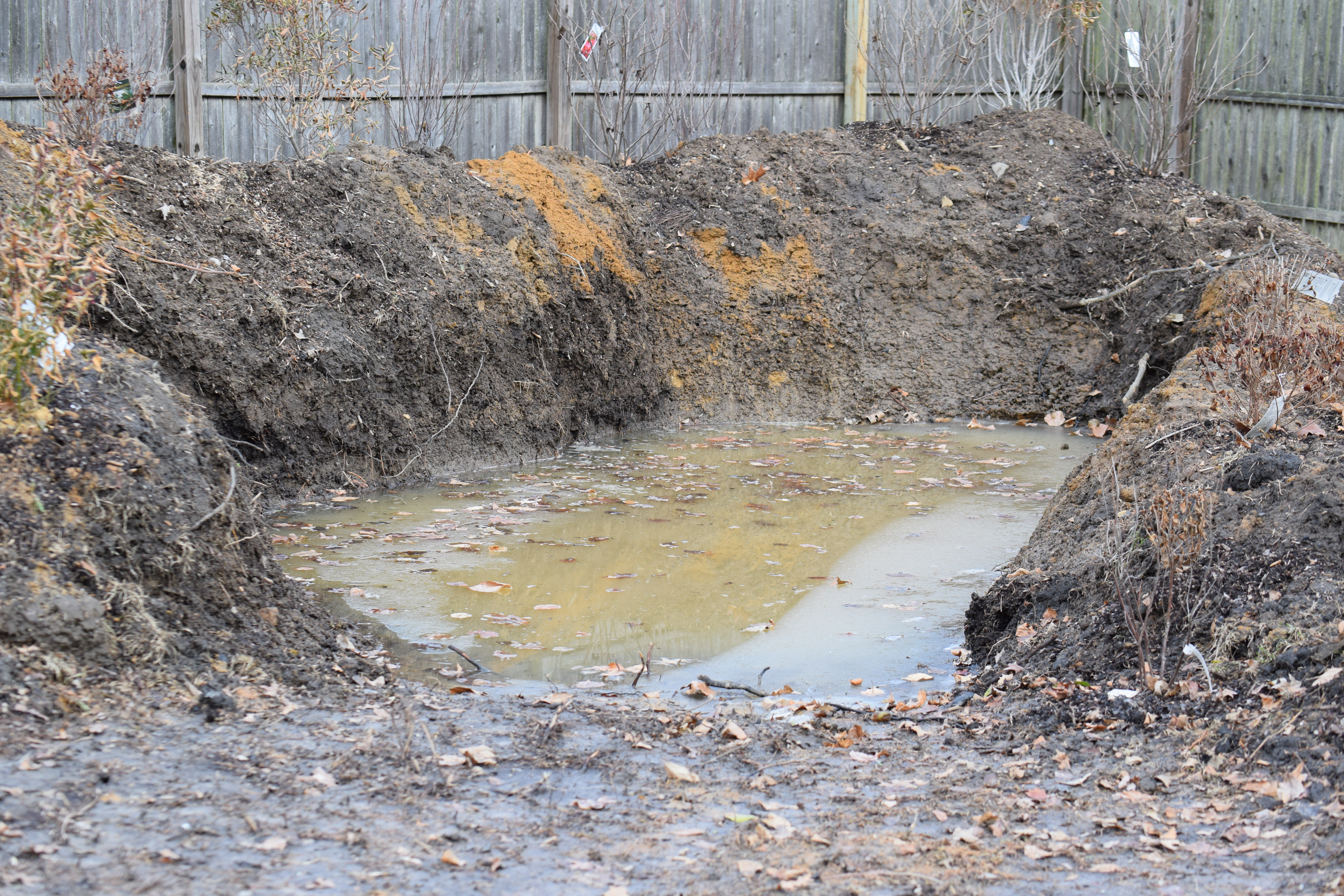
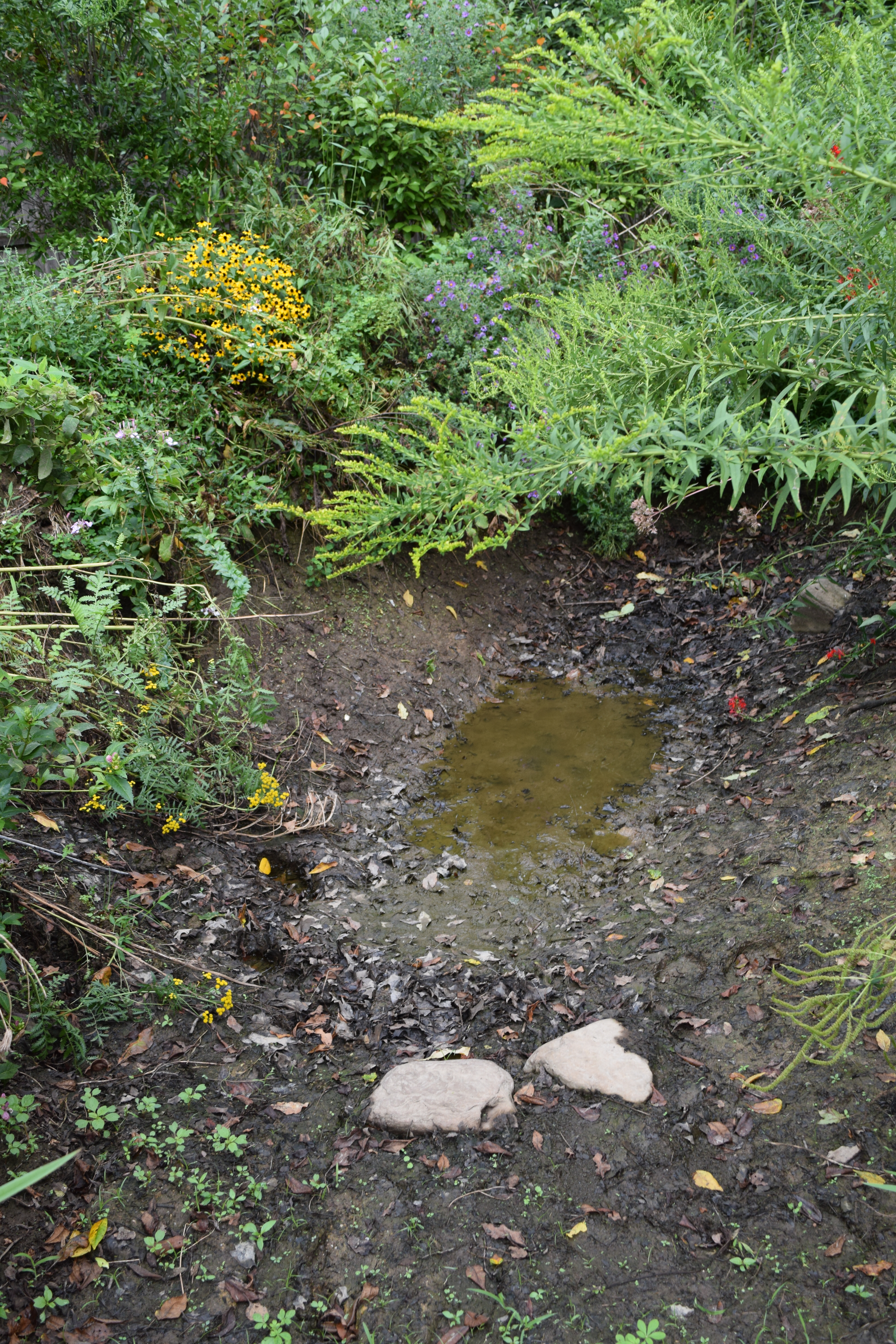
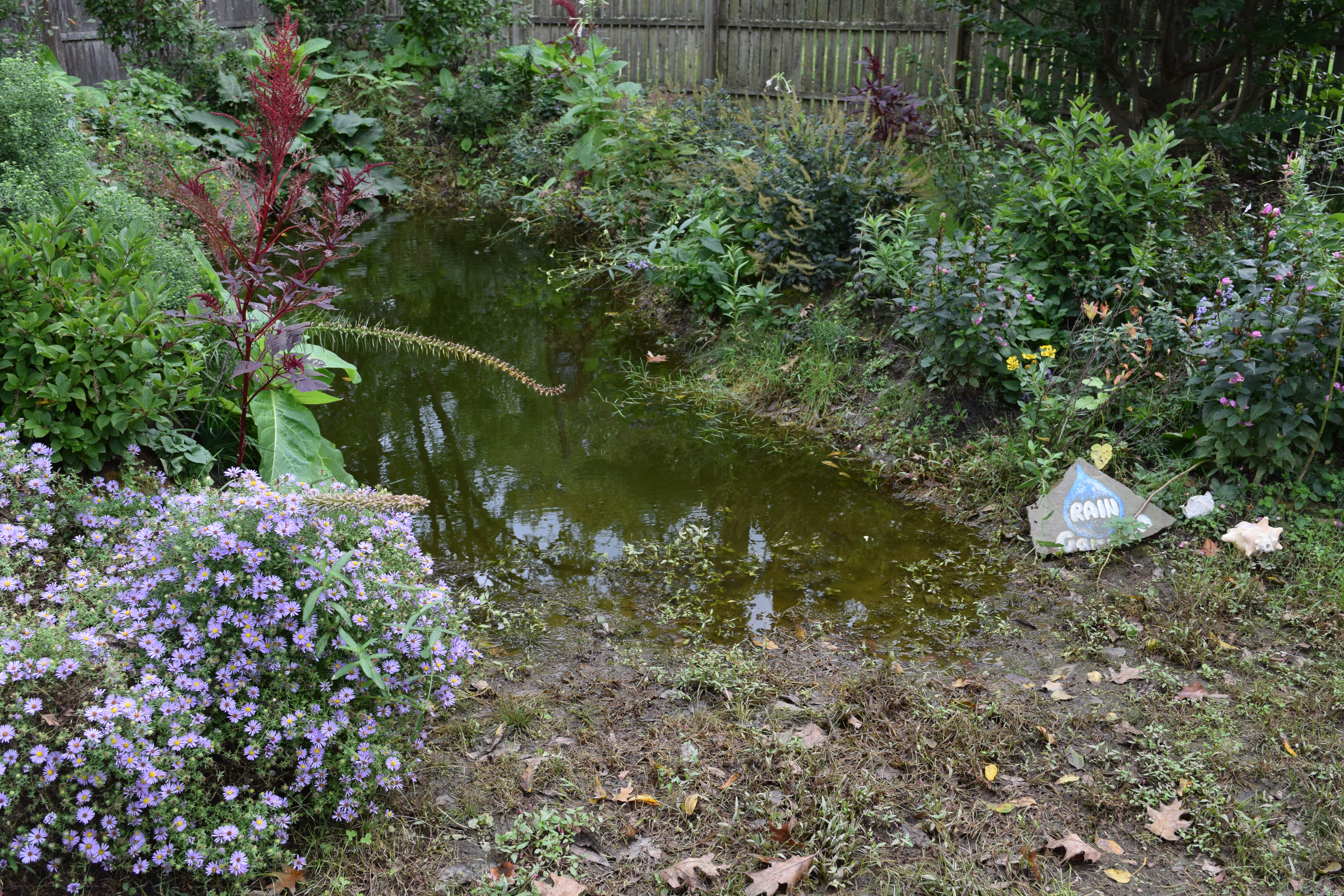
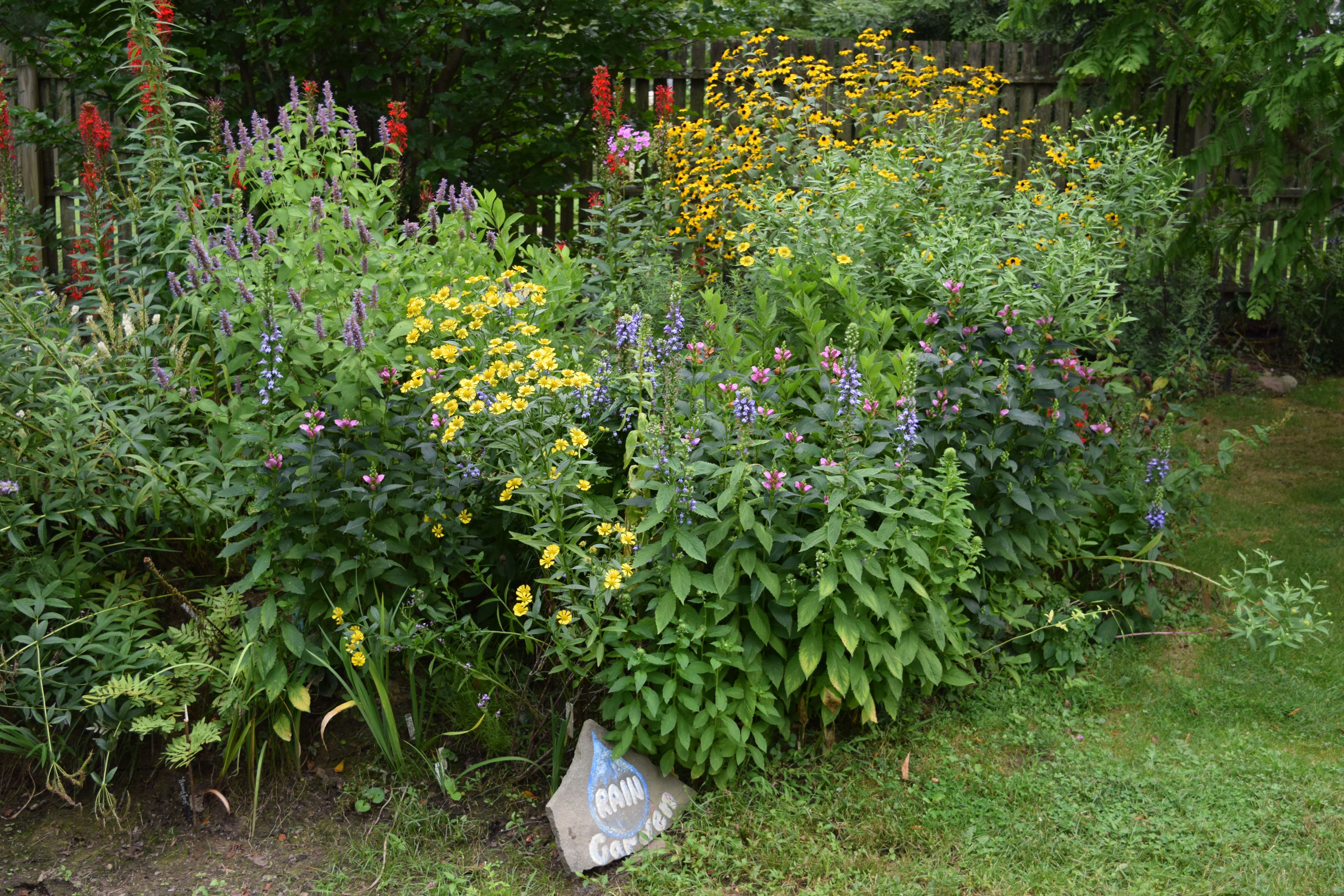
I designed it to have a horseshoe shape of soil on the downslope side. This was dug out from the hole. The rain stayed for a while in the hole and then gradually infiltrated into the soil. Sandy soils drain faster than clay soils. I hit some orange clay that you can see on the back bank. This meant that my rain garden was slow to drain. I didn’t mind but if you are worried about this make a dip in the bank to let water drain out at a certain level.
The Size and Shape of Your Rain Garden
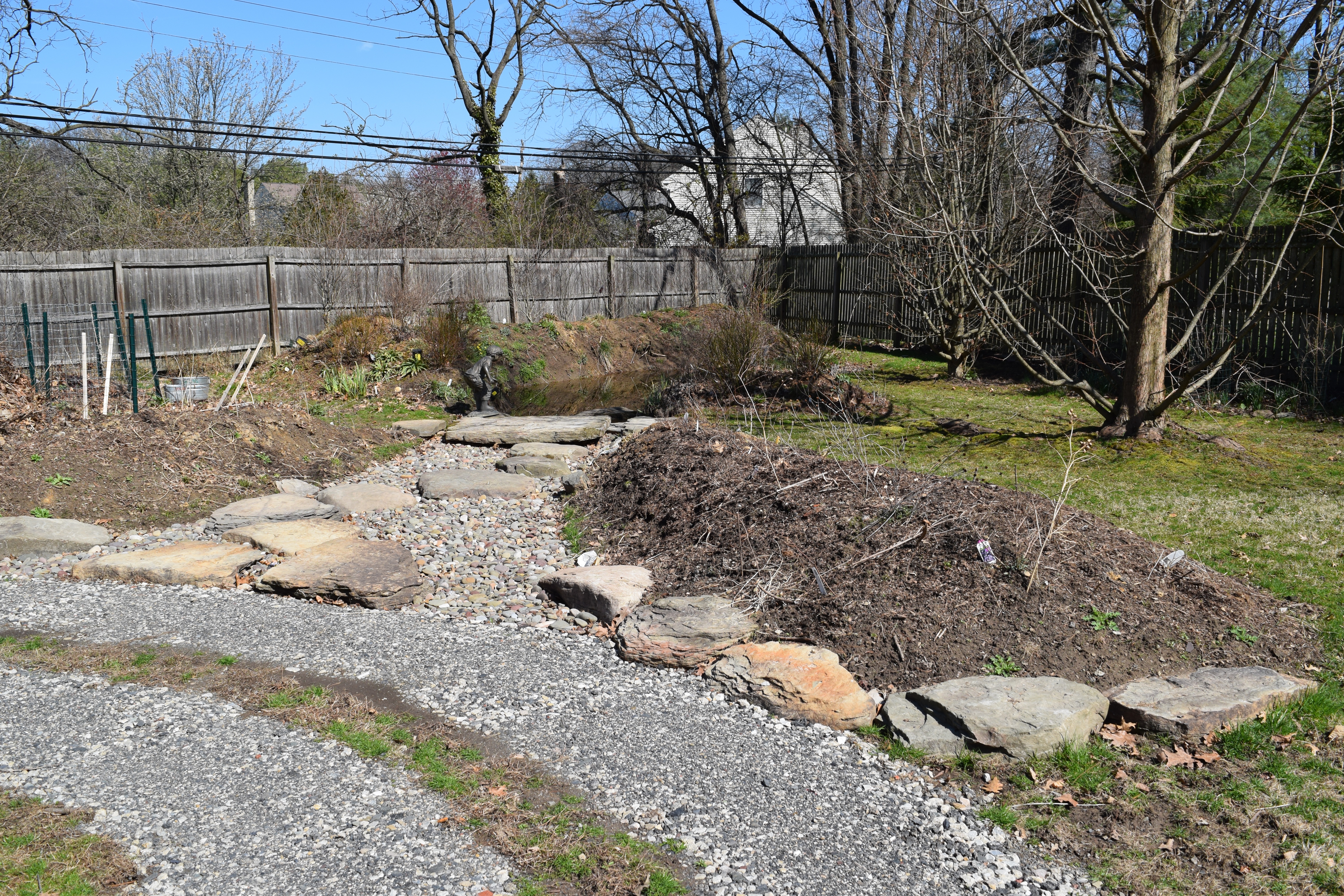
You might be intimidated by the pictures above and think that the rain garden put in is too large. Yes – it might be too large – but I do tend to get carried away with a project. Your rain garden can be any size. In fact, when you are starting out you may want to begin with one that takes the water from your down spout.
Also – look at the shape. The entrance to the rain garden should be wide so that you can catch the water from a large area of your property. I call my openings ‘welcoming arms’ because they are happily catching lots of runoff.
Other Rain Garden Possibilities
If your rain garden is dug down into the ground pull the hole about 10 feet away from the foundation of the house. Do not dig where there are underground utilities.
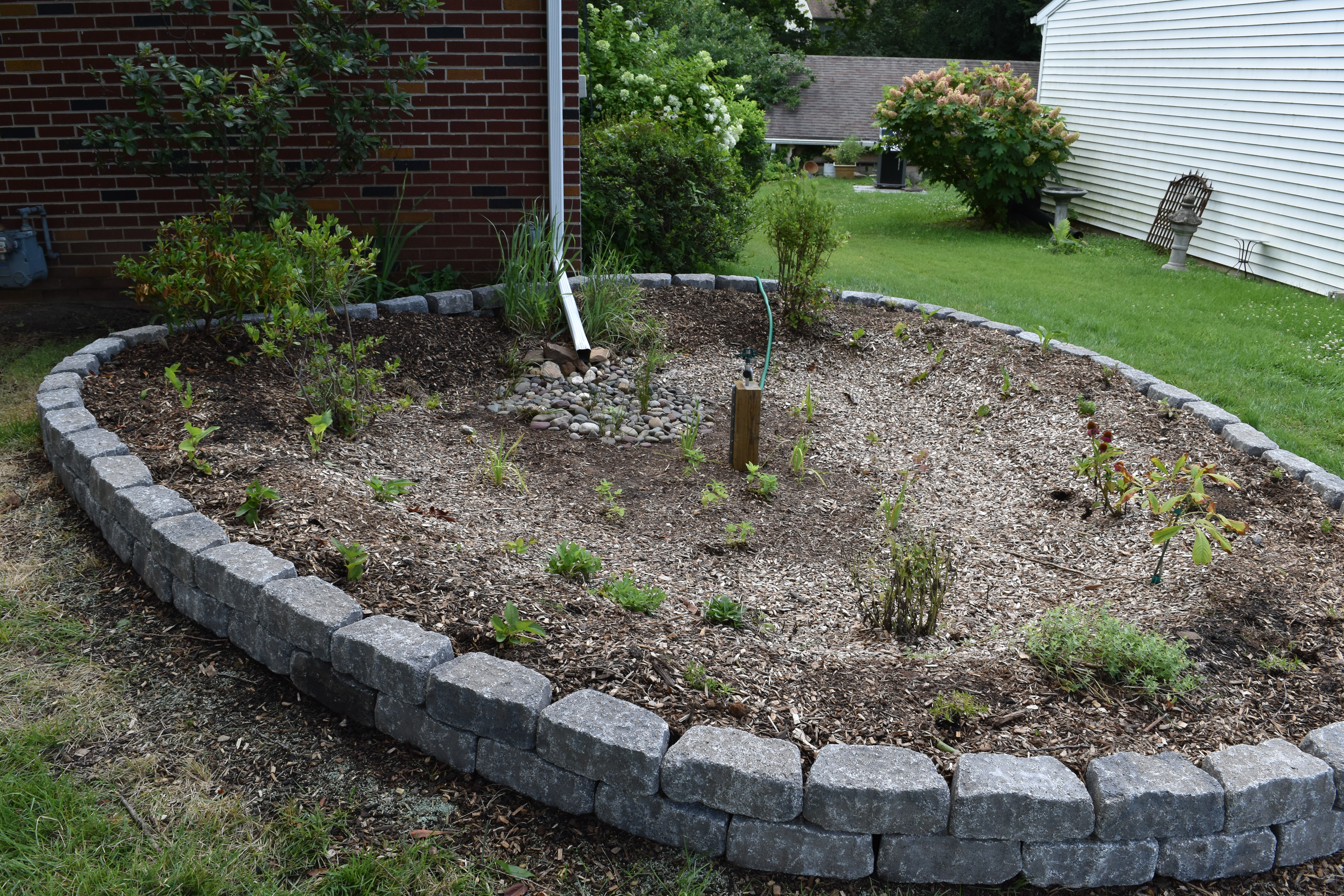
If you have a slope away from your house you can make a nice flower bed where the water from your roof waters your flowers. A win-win situation.
You can also work with local groups to get rain gardens that are part of a planter system. Look online and see if your neighborhood has such a plan or maybe start one if they do not! The more neighbors that install rain gardens the more effective the flood reduction becomes.
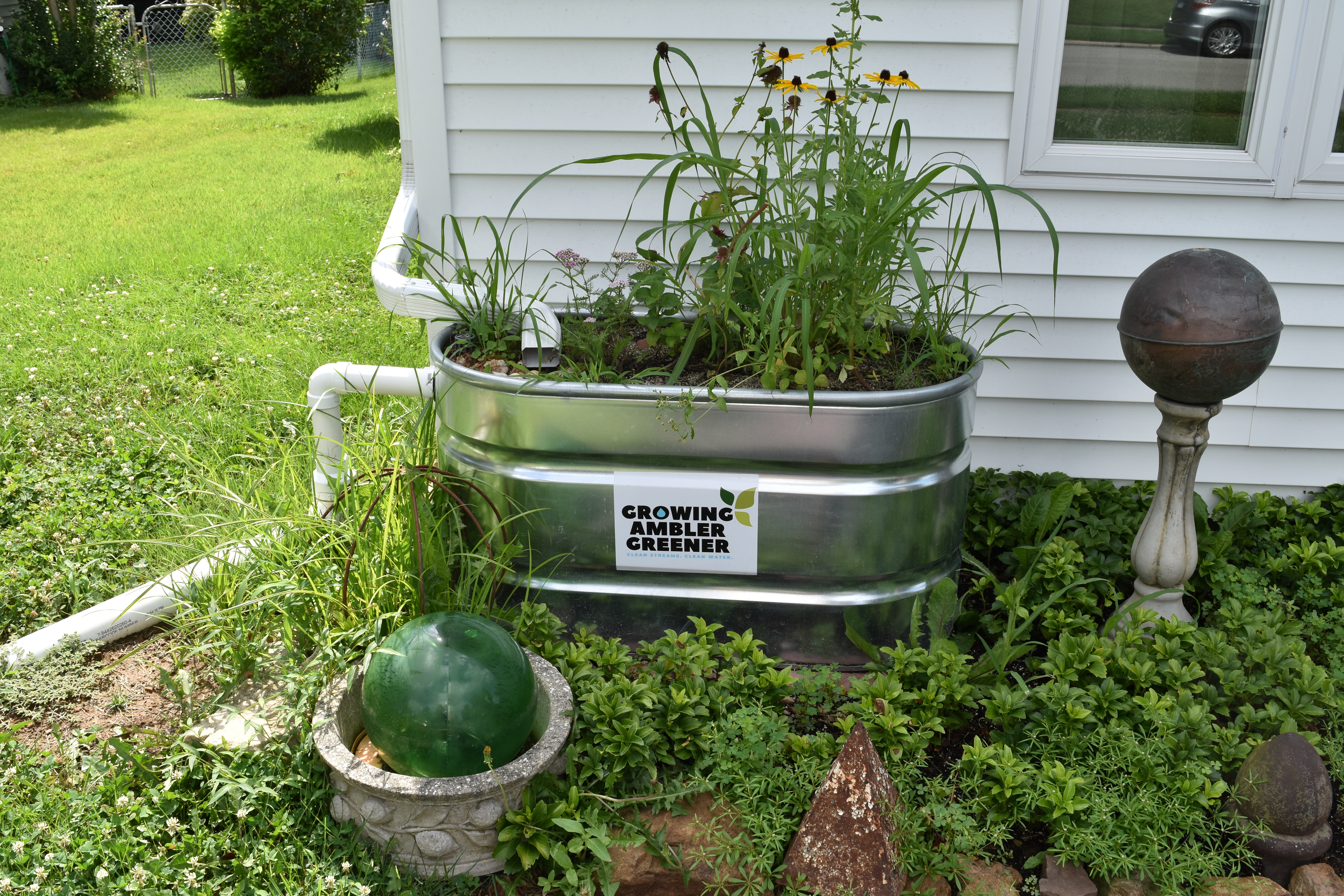
Having a way to reduce how much water streams off your roof and other paved surfaces down into the drain is a benefit to you and your community. Consider getting a group together to look at ways to reduce downstream flooding and stream bank erosion. Your trees and other plantings also benefit because the soil water levels are re-charged. Have a go!
Some Great Rain Garden Plants
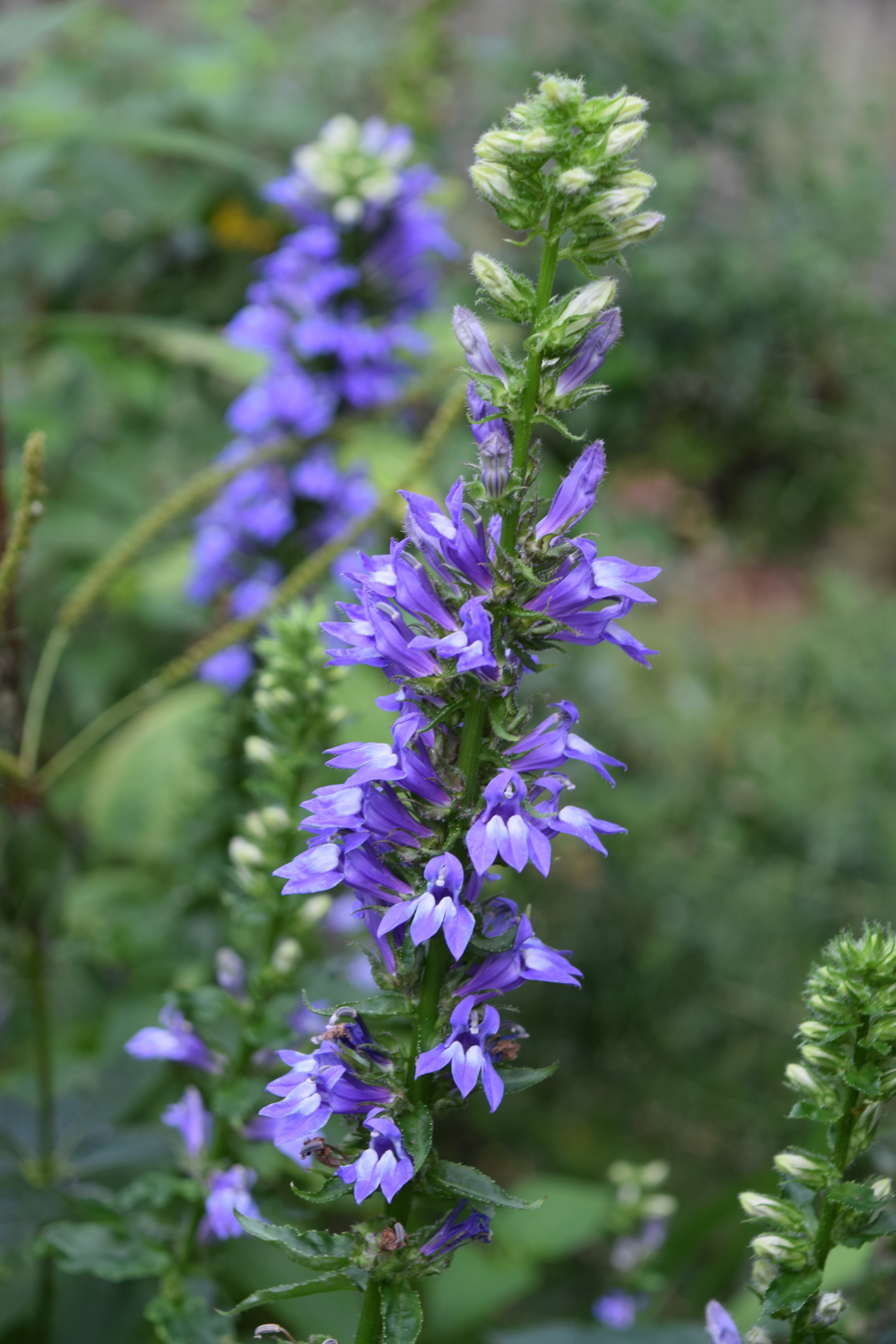
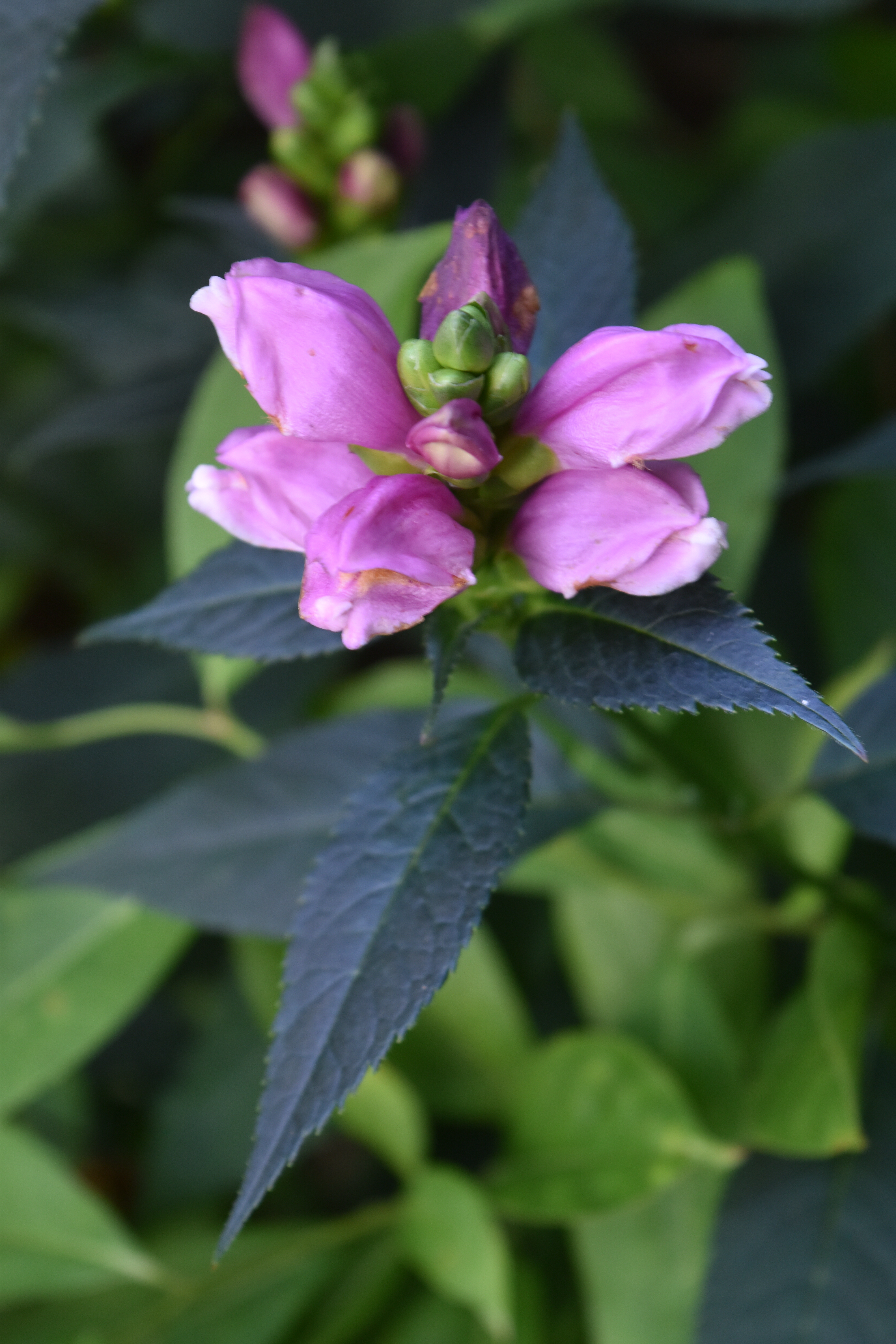
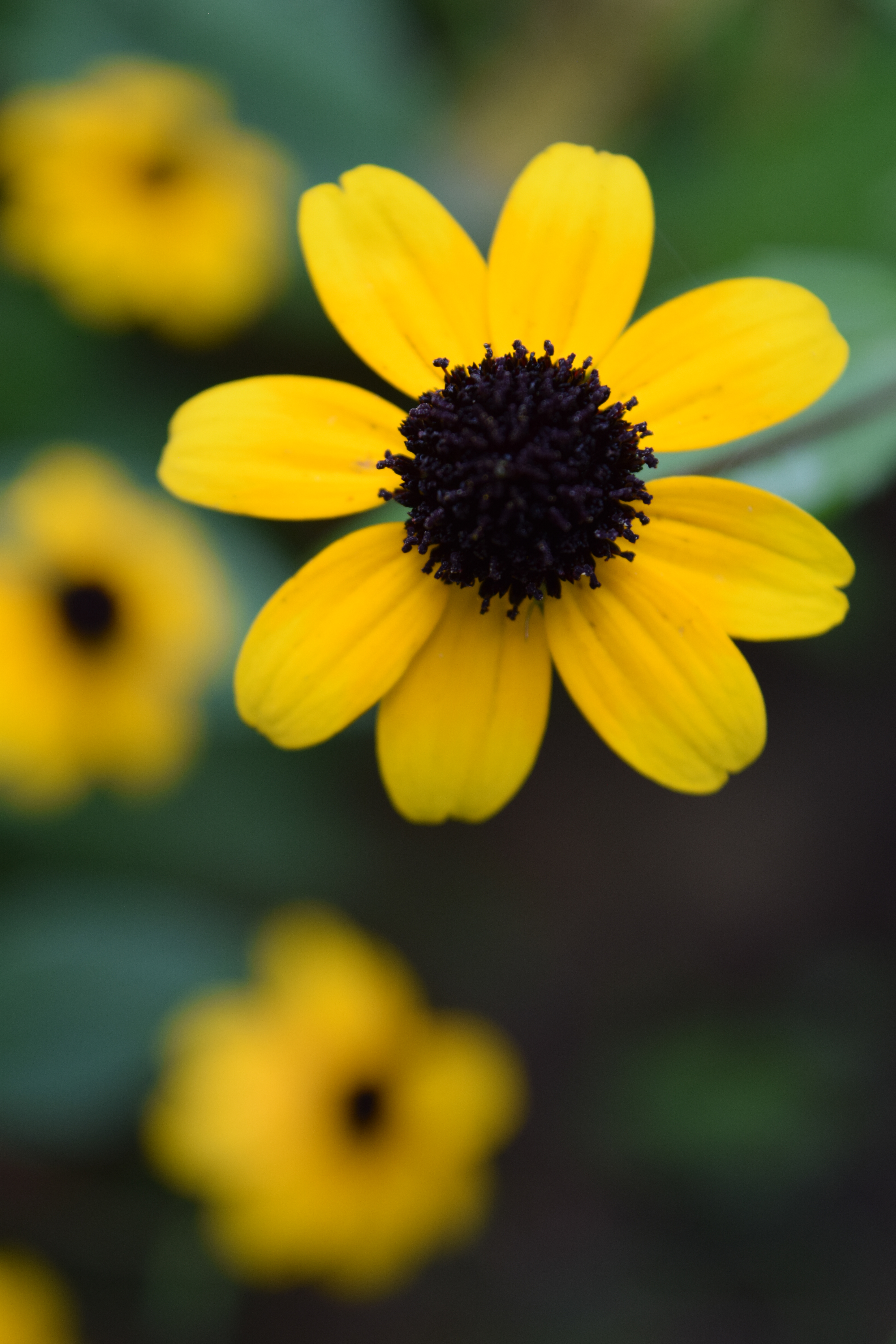
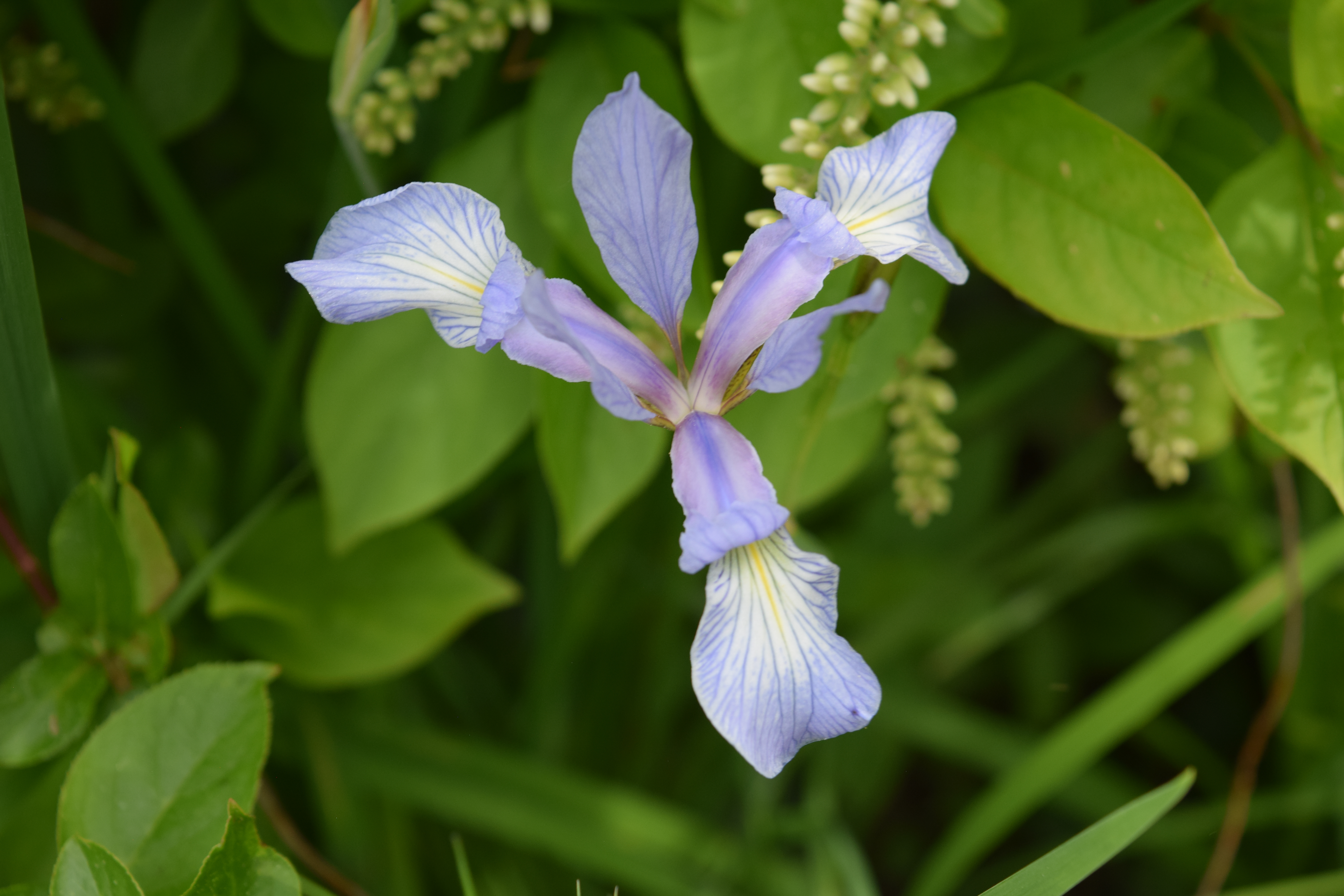
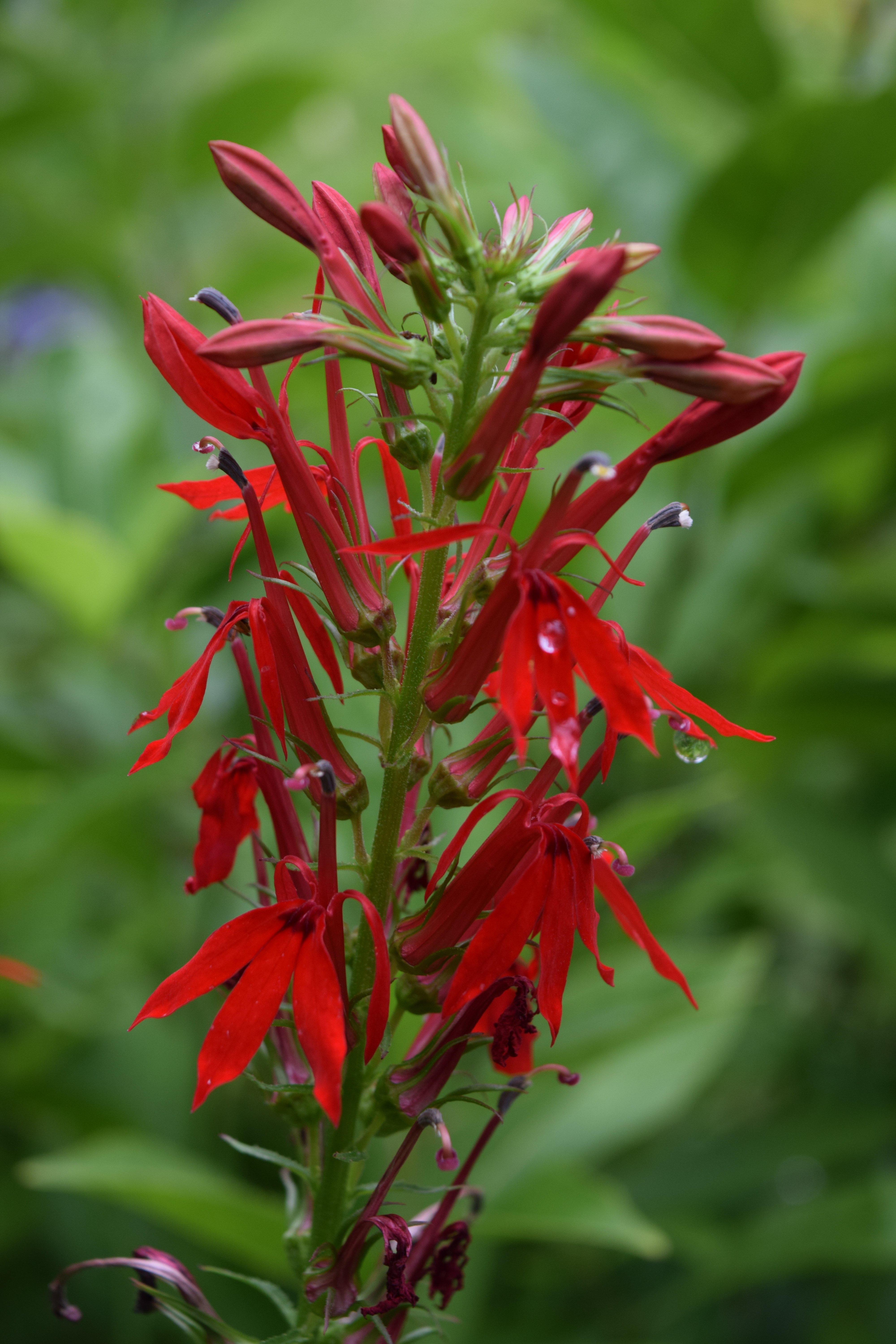
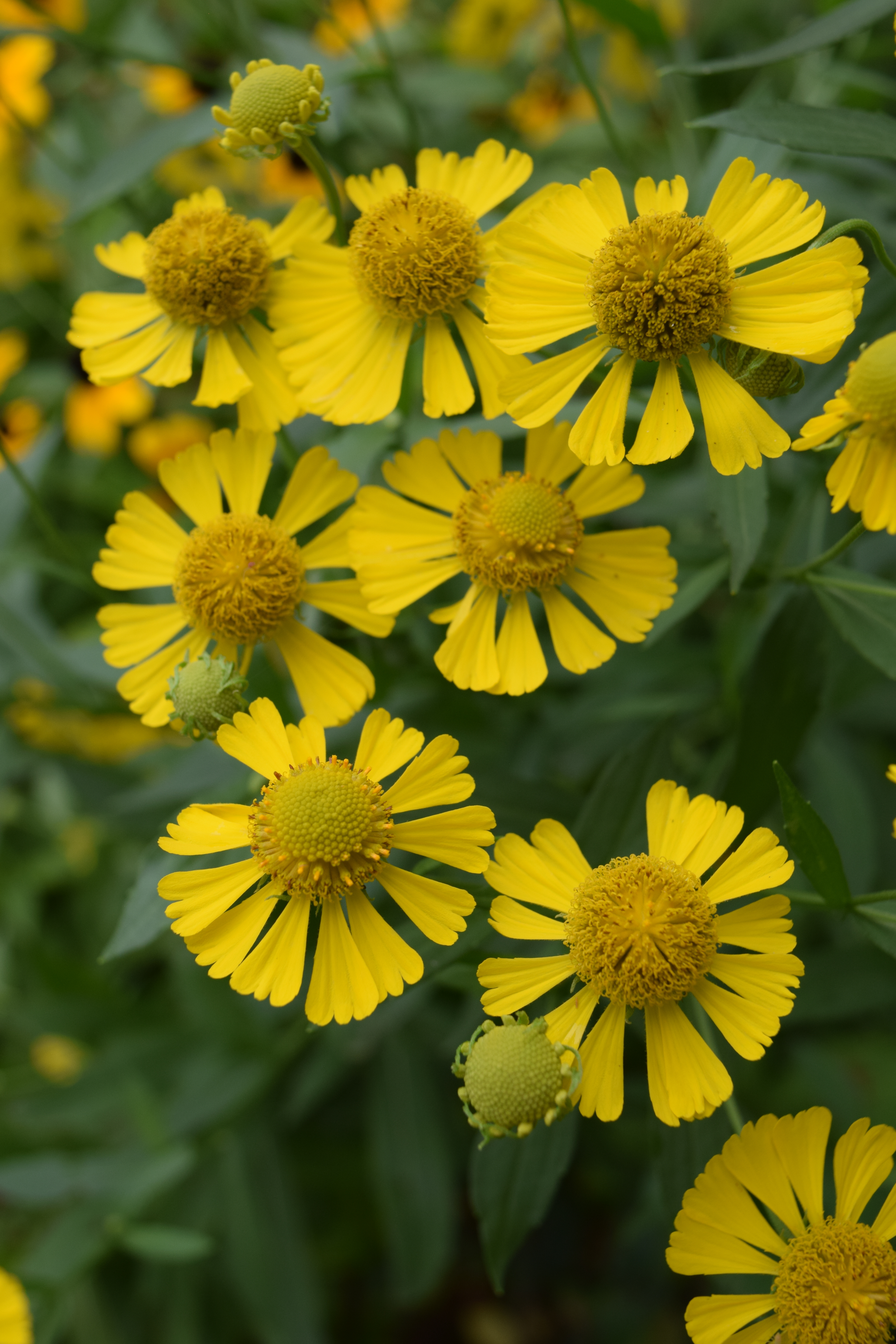
Last but not least what do you plant around your rain garden? There are three main zones to think about. If you make banks around the hole, the top of the bank will be relatively dry, the middle part will be moderately moist and the bottom will be seasonally wet – when it is your rainy season. I have chosen a plant palette of mostly Eastern North American natives because I garden for pollinators, and other beneficial insects. I have a gallery of some of those plants below. I suggest both blue and red lobelia, helenium, turtlehead, and rudbeckias. For shrubs try Itea, and Clethra – summersweet.
Bye for now Gardening Friends, Jenny Rose Carey
Discover more from Before You Garden...
Subscribe to get the latest posts sent to your email.
 Before You Garden...
Leave a comment